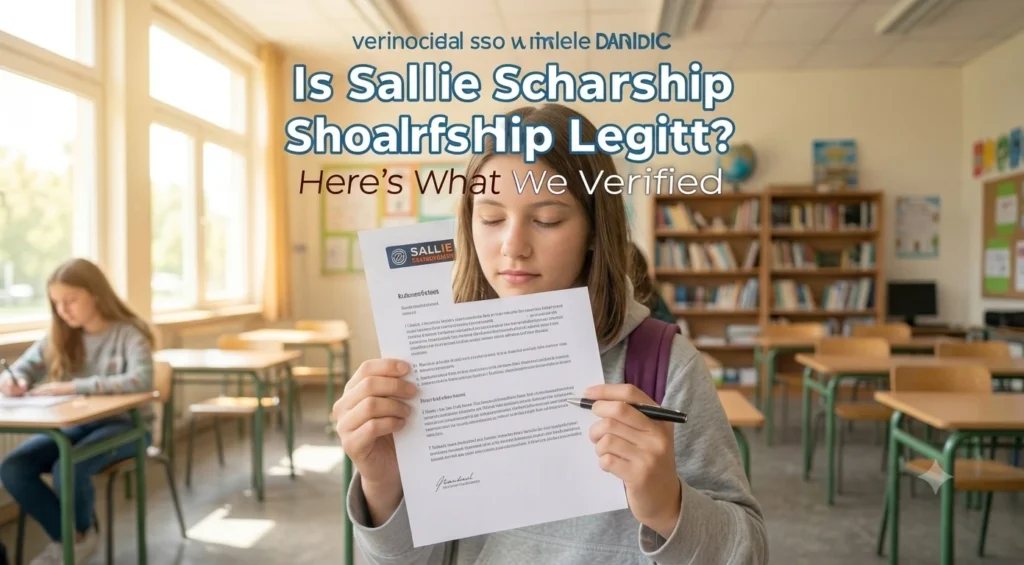
A student holds up her phone. “$2,000. No essay. Just apply.” The caption says Sallie. Half the comments say “applying now.” The other half say “this has to be fake.”
If you’ve landed here wondering, is Sallie Scholarship legit, you’re asking the same question thousands of students and parents search every year before submitting an application.
I get why. My inbox has had its share of scholarship offers that turned out to be junk, and I know plenty of parents who’ve told their kids not to bother because “it’s probably a scam anyway.” That habit of suspicion isn’t unreasonable. Fake grant letters, “processing fee” traps, phony award notifications asking for your bank info—all of that is real, and it’s why students learn to squint at anything offering free money for almost no effort.
So we dug into Sallie itself. Who’s behind it, how the scholarship actually runs day to day, and whether what’s circulating online matches anything real.
If you’re asking, “Is Sallie Scholarship legit?” you’ll find the answer here, along with how the scholarship works, who can apply, and the warning signs that help you avoid scholarship scams.
Quick answer up front. The rest fills in the gaps. Also Read How Do Scholarships Work? A Real-World Breakdown
Table of Contents
Quick Answer: Is the Sallie Scholarship Real?
Yes, it is. A real company with a long operating history runs it, not some page that appeared last week to collect emails. What trips people up is confusing “real” with “guaranteed” — those are two different things, and most of the online confusion traces back to that mix-up.
Who Is Sallie? (And What Happened to Sallie Mae?)
Mention “Sallie Mae” to anyone who’s helped a kid pay for college over the past couple decades, and they’ll nod immediately. Few names in student lending carry that kind of recognition.
About That Name Change
At some point the company trimmed its public name down to just Sallie. This kind of thing happens across the finance world all the time shorten the name, refresh the look, sound a little less like an institution from the 90s. There’s nothing hidden in that. But if you grew up hearing “Sallie Mae” specifically, and then “Sallie” shows up in a TikTok ad out of nowhere, a little confusion makes sense. Googling it, like you’re doing now, is exactly the right move.
What The Company Does Today
Student loans remain a core part of the business. Planning tools for families trying to figure out college costs before debt becomes the only option are part of it too. Scholarships fit into that same mission, and sure, there’s a marketing benefit to the company as well — help a student find scholarship money today, and there’s a decent chance that family remembers your name when they’re comparing loan options a year later. Companies do that. It doesn’t make the scholarship less real. Also Read Are Scholarships Taxable? Here’s What You Need to Know
How the $2,000 No Essay Scholarship Actually Works
This is the piece people ask about most, so here’s the breakdown.
Who Qualifies
High schoolers, current undergrads, and grad students can all apply. There’s no minimum GPA to clear, no essay to write. That low bar is exactly why it circulates so widely — it’s genuinely easy to enter.
What The Application Involves
A handful of basic fields — name, school, some academic info. No essay prompt, no writing sample, no interview. And no payment screen tucked in at the end. If you ever hit a step asking for a card number to “release” a scholarship, you’ve wandered off the real program and onto a copycat.
How Winners Are Chosen
It isn’t one single sweepstakes moment with a closing date. It runs on a recurring cycle, with new winners selected periodically rather than all at once.
Picture a senior — call her Maria — who hears about it from a classmate at lunch. She fills out the form in under ten minutes on her phone between classes, then applies again the next month because there’s nothing stopping her from trying more than once. That’s roughly how it’s meant to work.
What Actually Confirms It’s Legitimate
A few practical details separate a genuine scholarship from a scam dressed up like one:
- No fee at any point — not to enter, not to “unlock” a win, not to “process” a payout.
- A company with a track record you can actually look up.
- Nothing promised before you’ve applied. Genuine scholarships don’t tell you you’ve “already won” something you haven’t entered yet.
- A privacy policy that actually exists somewhere accessible, not hidden behind a locked page.
Sallie clears all of that. The marketing around it can be loud and a little breathless at times, sure — but the program underneath holds up.
Why It Still Feels Sketchy To So Many People
Fair enough to wonder, given everything above checks out.
Free Money Reads Like Bait
Because for a long time, it usually has been. Years of scam warnings train people to distrust anything labeled “easy, no strings attached.” That reflex just happens to be pointed at the wrong target in this particular case.
The Marketing Tone Doesn’t Do It Any Favors
“$2K. Zero essays. Don’t sleep on this.” Read that out loud once. It sounds a lot like scam copy, and honestly, that’s more of a tone problem than anything else a fifteen-second video rarely leaves room for nuance.
Copycats Are the Actual Risk
Here’s the part that deserves real attention. Because this format is popular, other pages mimic it — same “easy no-essay scholarship” pitch, similar branding, different owner entirely. The original program isn’t where the danger lives. The imitators borrowing its popularity are. Apply through the official site directly, and skip any link shared in a random comment or forwarded through a message. Also Read How Do I Set Up a Scholarship Fund?
How To Check Any Scholarship Yourself
Worth keeping this list handy, because you’ll need it again well beyond this one scholarship.
- No payment, period. A legitimate scholarship pays you. Not the reverse.
- Type the web address yourself. Skip the link in the ad; go straight to the source.
- Search the company name with the word “scam.” Takes half a minute, saves a lot of grief.
- Look for a Better Business Bureau listing, if the company has one.
- Ask your school’s financial aid office. They answer this exact question all the time and can usually confirm legitimacy faster than a search engine.
Do this a couple of times and it stops feeling like extra work. Most people who get caught by scholarship scams aren’t careless — they’re just rushed, because the marketing is built to feel urgent.
Should You Apply?
Reasons It’s Worth Doing
- Costs nothing to enter.
- Takes minutes, not hours.
- Backed by a company with real operating history behind it.
- No limit on how many times you can reapply.
Reasons To Keep Expectations In Check
- Low effort brings heavy competition. Thousands of students go for the same small pool of winners.
- Nothing here is promised. Treat it as a bonus attempt, not your main plan.
- Essay-free scholarships tend to have thinner odds than the ones requiring more work, simply because far fewer people bother writing an essay.
The mistake we run into constantly: a student applies to one or two no-essay scholarships, feels like the box is checked for the year, and stops looking. That’s a start. It isn’t a plan.
A Smarter Way To Approach Scholarship Season
Students who end up with meaningful scholarship money rarely rely on one source. They apply to several quick, no-essay scholarships for volume, then put real time into a few essay-based ones where competition thins out because most applicants won’t put in the effort.
If the FAFSA hasn’t been filed yet, that’s worth doing before anything else on this list. It costs nothing to try, and it can open up grant money that has nothing to do with scholarships at all.
Frequently Asked Questions
Is Sallie the same company as Sallie Mae? Yes. Same company, shorter name. The branding changed, nothing else did.
Do I have to pay to apply? No. Any version of this scholarship asking for payment isn’t the real one anymore.
How would I find out if I won? Through the contact information you gave on the application, directly from the company. If someone reaches out a different way asking for money or bank details first, that’s not a win notice that’s someone trying to scam you.
Is Scholly tied to Sallie? Yes. Scholly runs as a scholarship search tool connected to Sallie’s broader scholarship resources, built to match students with options at no cost to them.
What should I do if a scholarship looks off? Stop before entering any personal or financial details. Report it to your school’s financial aid office or the Better Business Bureau, and when you’re not sure, walk away first and check later.